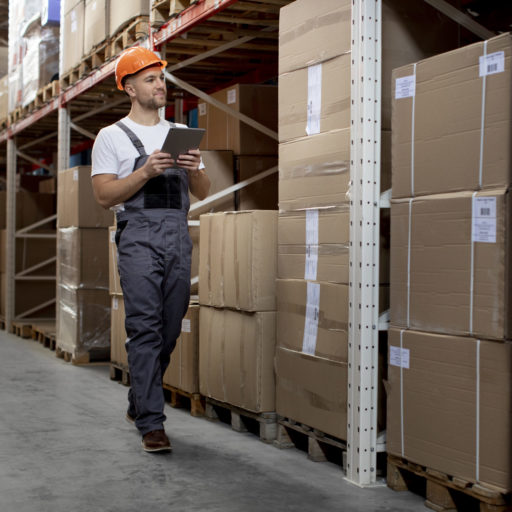
Trump’s 2025 tariffs — some reaching as high as 145% on Chinese goods — are forcing importers, wholesalers, and retailers into an inventory crisis with no easy exit. Products ordered months ago at pre-tariff costs are now sitting in warehouses, warehouses that businesses can no longer profitably sell through at any reasonable margin. The businesses that recover fastest are the ones that act on their surplus inventory now — before values drop further.
If you import goods, source from overseas manufacturers, or carry inventory ordered more than three months ago, there’s a good chance the tariff situation is already affecting your bottom line in ways that are hard to fully account for yet.
The math changed — suddenly and significantly. And for many businesses, the inventory sitting in their warehouse is now a financial problem that gets worse with every passing week.
This post breaks down exactly what’s happening, which businesses are most exposed, and what your practical options are right now.
What’s Actually Happening With the 2025 Tariffs?
The tariff situation in 2025 is unlike anything most business owners have dealt with before — not just in scale but in pace.
The Trump administration’s 2025 tariff escalation began with broad-based increases on Chinese imports, with rates climbing rapidly and reaching levels that fundamentally change the economics of importing goods from China. According to reporting from the Wall Street Journal, tariffs on certain Chinese product categories have reached 145% — meaning a product that cost $10 to import now carries an additional $14.50 in duty, before any other costs are accounted for.
For businesses that placed orders three to six months ago — which is standard lead time for overseas manufacturing and ocean freight — the tariff landscape when those goods were ordered looked completely different from the one that greeted them when the shipments arrived.
That gap is where the crisis lives. Inventory was ordered at one cost structure and is now being received and sold in a completely different one. Margins that looked reasonable on the purchase order look impossible on the income statement.
Which Businesses Are Most Affected?
Not every business feels this equally. Some sectors are absorbing the tariff shock far more severely than others.
Importers and Wholesalers:
This group is ground zero. Businesses that source finished goods or components from China, Vietnam, Bangladesh, and other heavily tariffed countries are facing immediate cost pressure on existing inventory — and a much harder decision about whether to continue importing at new tariff rates.
Mid-Size Retailers:
Large retailers have more leverage to renegotiate with suppliers, absorb short-term losses across a broader portfolio, or pass costs to consumers. Mid-size retailers don’t have those buffers. They’re caught between supplier costs they can’t easily renegotiate and customers who won’t absorb significant price increases.
Consumer Electronics Sellers
Electronics — heavily manufactured in China — is one of the hardest-hit categories. Margins were already thin in this space. The additional tariff burden on products like headphones, smart home devices, accessories, and mobile peripherals makes profitability at current retail price points extremely difficult.
Toy and Seasonal Goods Importers
The toy industry sources the vast majority of its products from China. With holiday orders typically placed six to nine months in advance, many importers locked in inventory at pre-tariff pricing that now carries dramatically higher landed costs — before the goods have even reached retail shelves.
Amazon FBA Sellers
Third-party Amazon sellers who source from China are facing a double compression — higher landed costs squeezing margins on one side, and Amazon’s own storage fees and competition from other sellers squeezing on the other.
Why This Is Creating a Surplus Inventory Problem — Not Just a Margin Problem
Here’s what makes the current tariff situation uniquely damaging for inventory: it’s not just reducing margins, it’s actively creating surplus.
When the landed cost of a product increases by 30%, 50%, or more due to tariffs, the natural response is to raise prices. But consumers don’t automatically accept those price increases — especially for discretionary goods where alternatives exist. When price increases don’t hold, sales volume drops.
Lower volume means inventory moves more slowly. Slower-moving inventory means warehouses fill up. And full warehouses mean businesses that were planning to receive their next shipment now have nowhere to put it — or are paying to store goods they can’t profitably sell.
This creates a compounding cycle: tariffs raise costs, sales slow, inventory builds up, carrying costs increase, and cash flow deteriorates — all at the same time.
The Peterson Institute for International Economics has noted that tariff shocks of this magnitude historically cause immediate disruptions in purchasing behavior, often leading to sharp inventory corrections that take 6–18 months to fully work through the supply chain.
For businesses in the middle of that correction right now, 6–18 months is not a viable waiting period.
What Are Businesses Actually Doing Right Now?
The responses businesses are taking to the tariff-driven inventory crisis fall into several categories — some more effective than others.
Pausing New Orders Many importers have immediately suspended purchase orders from tariff-affected countries, waiting for policy clarity before committing to new inventory. This is prudent for future exposure but does nothing for the inventory already on the ground.
Attempting Price Increases Some businesses are passing tariff costs to consumers through price increases. This works in categories with limited substitutes or strong brand loyalty — but fails quickly in price-sensitive categories where consumers easily switch to alternatives or simply wait.
Absorbing the Loss Businesses with sufficient capital reserves are absorbing the margin hit in the short term, betting that the tariff situation will moderate. This is a viable strategy for some — but it requires cash reserves that many mid-size businesses simply don’t have.
Liquidating Excess Inventory The most financially direct response is converting excess inventory to cash through wholesale liquidation. Rather than continuing to pay carrying costs on goods that can’t be sold profitably through normal channels, businesses are selling surplus stock in bulk to direct wholesale buyers — recovering partial value immediately and stopping the ongoing cost bleed.
This is the option that makes the most sense for businesses that need to act now rather than wait out a policy situation that has no clear resolution timeline.
What Should You Do If You’re Sitting on Tariff-Affected Inventory?
If your business is holding excess inventory that the tariff situation has made difficult or impossible to sell profitably through your normal channels, here is a practical action plan:
Step 1 — Quantify your actual exposure.
Pull a full inventory report and identify every SKU that has been affected by tariff cost increases. Calculate your current landed cost vs. what you can realistically sell the goods for. The gap between those numbers is your loss if you hold — and knowing that number clearly is the starting point for every decision that follows.
Step 2 — Separate what’s salvageable from what isn’t.
Some of your tariff-affected inventory may still be sellable through your primary channels at adjusted prices — particularly if those goods are in categories with limited alternatives. Other inventory may be fundamentally unsellable at a profit through normal channels and needs a different exit.
Step 3 — Get a wholesale liquidation quote immediately.
For inventory that can’t be moved profitably through your primary channels, the fastest way to recover value is through a direct wholesale liquidation buyer. The longer you wait, the more carrying costs accumulate — and in some categories, the more the goods themselves depreciate.
At Liquidation Wholesale Buyers, we buy overstock, closeout, and excess inventory directly — across all product categories, including the electronics, home goods, toys, and general merchandise categories most affected by the current tariff situation. Submit your inventory details and we’ll return a competitive, market-based offer within 48 hours.
Step 4 — Reassess your sourcing strategy.
Once the immediate inventory situation is addressed, the longer-term question is where and how you source going forward. Nearshoring, supplier diversification, and smaller, more frequent orders that reduce exposure to sudden cost shifts are all strategies businesses are actively moving toward. For guidance on supply chain diversification, resources like the MIT Center for Transportation and Logistics offer practical frameworks for rethinking sourcing in volatile trade environments.
Step 5 — Don’t wait for policy clarity to act.
Trade policy in 2025 is moving faster than business planning cycles. Waiting for the tariff situation to “settle down” before addressing existing surplus inventory is a costly strategy — because carrying costs don’t pause while you wait, and market values for excess goods tend to decline, not improve, over time.
The Opportunity Inside the Crisis
There is a counterintuitive opportunity embedded in the current tariff environment that’s worth acknowledging.
Secondary markets for closeout and liquidation goods are more active than they’ve been in years. Consumer appetite for discounted merchandise is strong — driven in part by the same economic pressures that are affecting businesses. Buyers in the liquidation and recommerce space have strong demand for excess inventory right now.
That means the recovery rates available for well-documented, sellable inventory are competitive. Businesses that act now — rather than holding through further carrying costs and depreciation — are recovering more value than those who wait until their surplus becomes distressed.
If you’re dealing with tariff-affected excess inventory, the window to maximize recovery value is open now. It gets narrower as the year progresses.
Ready to convert your excess inventory to cash?
Submit your inventory details at Liquidation Wholesale Buyers and receive a competitive offer within 48 hours.
📞 (224) 619-7639 | ✉️ info@liquidateproducts.com 📍 1717 N. Naper Blvd, Naperville, IL 60563